Home » AI Governance & Safety » The 12 Principles of AI Governance and Security | AVP
- Christopher Littlestone

The 12 Principles of AI Governance and Security
Most businesses did not choose to adopt artificial intelligence. It arrived through individual employees, one browser tab at a time, long before any policy existed to govern it. That gap between adoption and governance is where the real risk lives. The businesses that will avoid costly mistakes are not the ones that ban AI or the ones that use it carelessly – they are the ones operating on a set of clear, tested principles. The following 12 principles come from decades of security doctrine, cybersecurity education, and business practice, translated directly into the AI era.
TL;DR Executive Summary
- This article lays out 12 core principles of AI governance and security that any business can apply immediately, regardless of size or industry.
- Most AI risk inside a business does not come from the technology itself. It comes from the absence of clear principles guiding how employees use it.
- Ungoverned AI use exposes proprietary data, invites reputational damage, and creates risk that is entirely avoidable with basic discipline.
- These principles were developed from Special Forces security doctrine and from cybersecurity and small business security coursework taught to more than 4,000 students through Special Operations University.
- The principles map directly onto the GUARD Framework and are taught as a full teaching block inside the AI Visibility Professional (AVP) Certification.
Table of Contents
As many of you know, AI visibility is my full-time work today, but my previous career was in Special Operations. Upon graduating from a career as a Green Beret officer, I founded a schoolhouse called Special Operations University, where I have taught cybersecurity and small business security to more than 4,000 students. I have also had the privilege of teaching the principles of business security to MBA students in the classroom. What follows are 12 principles that are universally applicable to business, and especially relevant in the AI context. They are tried and true. They are simple to understand, but they are important to know if you intend to safeguard your business in the age of artificial intelligence.
What Is AI Governance and Security?
AI governance and security is the practice of applying clear principles and consistent behavior to how a business and its employees use artificial intelligence. It is not a technical firewall or a piece of software. It is a discipline, built the same way physical security or financial controls are built – through principles that are taught, repeated, and enforced until they become habit.
How These Principles Fit Into the GUARD Framework
At AI Visibility Professional (AVP), we teach three disciplines. Organic AI visibility is taught through the FOUND Framework. Paid AI visibility is taught through the PAID Framework. AI governance and safety is taught through the GUARD Framework.
The GUARD Framework is built around five pillars:
- G – Governance: Establish rules, standards, and accountability.
- U – Unsupervised AI: Trust, but verify.
- A – Audience: Influence precisely. Exclude aggressively.
- R – Reputation Protection: Brand trust is more important than traffic.
- D – Data Protection: Secure the information that powers your business.
GUARD is not a compliance framework and it is not an ethics framework. It is a business protection framework, and it can be taught and implemented on its own, independent of FOUND and PAID. The 12 principles below are the practical, ground-level behaviors that make the GUARD Framework work in daily practice. Each one reinforces one or more of the five pillars above.
The following definitions are adapted from the AI Visibility Definition Library.
GUARD Framework: The GUARD Framework is the AI Visibility Professional system for AI governance and safety, built around five pillars – Governance, Unsupervised AI, Audience, Reputation Protection, and Data Protection – that together help organizations protect their reputation, accuracy, and data while using artificial intelligence.
Unsupervised AI: Unsupervised AI describes any use of artificial intelligence within a business that occurs without human review, verification, or oversight, creating risk of undetected errors, overreliance, and broken workflows.
Anticipate-Mitigate Methodology: The Anticipate-Mitigate methodology is a risk management approach in which a business predicts likely AI-related failures before they occur and builds specific countermeasures to reduce their likelihood or severity in advance.
AI Visibility Professional (AVP): An AI Visibility Professional is a certified practitioner trained in organic AI visibility, paid AI visibility, and AI governance and safety, responsible for helping a business be accurately understood, trusted, and recommended by AI systems while managing the associated risks.
The 12 Principles of AI Governance and Security
These principles are listed in the order they are taught. Each stands on its own, but together they form a complete operating discipline.
1. Security Is Rule #1
This is taught in Infantry Basic Training. It is taught in the Special Forces Qualification Course. It is taught at Ranger School. It is the guiding and primary rule of small unit tactics – before you eat, you ensure your security is set. Before you sleep, you ensure your security is strong.
Security is the first decision a business makes, not the last consideration it gets around to.
Before an employee opens an AI tool, the business’s security posture should already be set – approved tools identified, data boundaries drawn, permissions defined. Before a single prompt runs through a third-party model, make sure your AI governance is set. Businesses that treat AI security as an afterthought will eventually pay for that sequencing.
2. You Are the Product
Conventional wisdom holds that if you do not pay for the product, you are the product. Google provides an extraordinary free service and pays for it by using what it learns about you to sell advertising. A free mobile game may ask for access to your contacts, photos, and camera – access it does not need to let you play chess, but does need to build a data asset it can sell.
If you do not pay for the AI tool, your data is paying for it instead.
The same logic applies inside a business. A free, consumer-grade AI tool has to generate revenue somewhere, and prompt data is often the raw material. An employee who pastes client information, financial figures, or proprietary code into a free public model may be feeding a data asset that the vendor monetizes. This is the single clearest link between the GUARD Framework’s Data Protection pillar and daily employee behavior.
3. Prevention Is Less Expensive Than Consequence Management
It is far cheaper to pay for prevention and education than to absorb the cost of a data exposure or a security failure after the fact.
The cost of an AI policy is always lower than the cost of an AI incident.
The business that invests in an AI Policy and Standard Operating Procedure before a problem occurs spends far less than the business that has to manage a data leak, a client relationship damaged by an AI error, or a regulatory inquiry after the fact. Prevention is a line item. Consequence management is a crisis.
4. Humans Are the Weakest Link
Doctoral research into cybersecurity behavior consistently shows the same pattern – employees agree that good security behavior matters, but when the moment arrives, they usually take the path of least resistance. They are too busy. The offer looked legitimate. The person on the phone was convincing.
Employees already know the right behavior. They simply do not practice it under pressure.
This is the human reality behind the GUARD Framework’s Unsupervised AI pillar. Employees over-trust AI outputs, use AI tools inconsistently across a team, and are often unaware that many AI services are designed to collect, process, and monetize the information passed through them. Education alone does not solve this. Education paired with structure does.
5. Trust Nothing – Be Deliberate
Most people trust their devices and their apps by default, simply because those tools are familiar and convenient. That default trust is exactly what creates exposure. Reading a privacy policy takes a few minutes. Reviewing app or tool permissions takes one more. That handful of minutes is what separates a business with intact data from one that has quietly leaked it.
Default settings are not a security strategy.
Applied to AI, this means being deliberate about which tools are approved for business use, what data those tools are permitted to access, and what each vendor’s terms actually say about how prompt data is stored and used. Deliberate review costs minutes. Undeliberate exposure costs far more.
6. Preventative Maintenance
Readiness has a cost, but that cost is paid in advance, not in the middle of a crisis.
Readiness is purchased ahead of time. It is never available at the moment it is needed.
For a business, this means an AI Policy and Standard Operating Procedure exists before an incident forces one into being. This is the same requirement that defines the “Guarded” stage of full AI governance maturity – a written policy, new employees who read it, and specific training on the tools actually in use.
7. Proactive, Not Reactive
Preventative maintenance only works if it is scheduled, not left to whenever someone remembers. Just as a vehicle needs its oil changed on a fixed interval rather than after the engine fails, AI governance requires a recurring, deliberate cadence of review.
A governance policy built after an incident is a lesson. A governance policy built before one is a defense.
A business that reviews its AI tools, permissions, and training only after something goes wrong is not practicing governance. It is practicing damage control with a delay.
8. If You Don’t Understand It, Don’t Do It
In cybersecurity, this principle underscores the importance of competence before action. Misconfigured settings and blindly followed advice create vulnerabilities. Mishandled data creates legal, financial, and reputational consequences.
Competence comes before authorization.
Applied to AI, no employee should deploy a workflow, connect a tool, or feed business data into a system they do not fully understand. If something is unclear, the correct response is to stop, disengage, and verify through a separate, trusted channel before proceeding. Competency is precisely what a business is building when it invests in AI governance training in the first place.
9. The Aggregate Effect
The aggregate effect describes the combined impact of individually harmless pieces of information. A birthday alone reveals little. An address alone reveals little. A vacation photo alone reveals little. Combined, a criminal now has enough to convincingly impersonate someone to a bank.
One prompt is a fact. A hundred prompts are a pattern.
The same math applies to AI prompts. A single prompt naming a client is low risk. A single prompt referencing a budget figure is low risk. A single prompt describing an unreleased product is low risk. Aggregated across hundreds of prompts entered into a third-party model over months, that same information can reconstruct proprietary business intelligence that no single prompt would have revealed on its own. This is why the Data Protection pillar of GUARD treats cumulative exposure, not just single incidents, as the real risk.
10. Inspect (Checklist Discipline)
Nothing gets done reliably unless it is inspected. Pilots use checklists to verify aircraft integrity before every flight, not because they are careless, but because memory alone is not a reliable system.
What is not inspected eventually fails.
Periodic inspection of a business’s AI governance posture – which tools are in use, what data they touch, whether the policy is current – is what prevents small gaps from becoming large exposures. This is the practical purpose behind a structured AI Governance Audit.
11. Nudge Effect
The nudge effect, the behavioral economics concept that earned Richard Thaler the Nobel Prize in 2017, shows that people who already know the right behavior are significantly more likely to act on it when given a small, recurring reminder.
People already know the right behavior. They need a reminder, not a lecture.
A single AI governance training session, delivered once and never repeated, fades quickly. A short recurring reminder – a monthly checklist, a calendar prompt, a quick refresher – keeps the policy alive in daily practice long after the original training is forgotten.
12. Anticipate – Mitigate
The best way to avoid a business problem is to see it coming and act before it arrives. This is nothing more than risk management stated plainly – anticipate what is likely to go wrong, then take deliberate action to reduce its likelihood or severity.
See the risk coming, then take away its power.
Consider a common scenario. A business can anticipate that employees will eventually paste proprietary information into an open, consumer-grade AI model simply because it is fast and convenient. Once that risk is anticipated, mitigation follows directly from the principles above – train the weakest link in the chain (Principle 4), and reinforce that training with recurring nudges (Principle 11) so the right behavior survives past the first training session. Anticipate-Mitigate is a complete methodology in its own right, and it deserves a full treatment on its own. This principle is the bridge into that deeper discussion.
Summary Table
| Principle | Business Risk | Countermeasure |
|---|---|---|
| 1. Security Is Rule #1 | AI adopted before any security posture exists | Set tool and data boundaries before AI use begins |
| 2. You Are the Product | Free tools monetize business prompt data | Approve only tools with clear data-handling terms |
| 3. Prevention < Consequence Management | Costly recovery after an AI incident | Invest in policy and training before an incident occurs |
| 4. Humans Are the Weakest Link | Employees over-trust or misuse AI under pressure | Structured training paired with ongoing reinforcement |
| 5. Trust Nothing – Be Deliberate | Default permissions expose data unintentionally | Deliberately review tool permissions and vendor terms |
| 6. Preventative Maintenance | No policy exists when it is needed most | Maintain a written AI Policy and SOP in advance |
| 7. Proactive, Not Reactive | Governance only addressed after an incident | Schedule recurring governance review cycles |
| 8. If You Don’t Understand It, Don’t Do It | Employees deploy AI workflows they don’t understand | Require competency before authorization to act |
| 9. The Aggregate Effect | Cumulative prompts reconstruct proprietary information | Treat cumulative exposure, not single prompts, as the risk |
| 10. Inspect (Checklist Discipline) | Small governance gaps go unnoticed | Periodic structured AI governance audits |
| 11. Nudge Effect | One-time training fades from practice | Recurring reminders to reinforce known behavior |
| 12. Anticipate -Mitigate | Risks go unaddressed until they occur | Predict likely failures and build countermeasures in advance |
A Business Example: Governed vs. Ungoverned AI Use
A 40-person marketing agency’s account team begins using AI tools daily to speed up client campaign drafting.
Bad Example
No AI policy exists. Account managers paste client budget figures and campaign details into a free, public AI tool to save time. No one reviewed the tool’s data-handling terms. Months later, a client recognizes fragments of their own unreleased campaign details surfacing in an AI-generated response to an unrelated query. The client terminates the account and the agency’s reputation absorbs damage that took years to build and one habit to unravel.
Good Example
The agency adopts a written AI Policy and SOP before rolling out AI tools team-wide. Employees are trained on which tools are approved and why, reinforced with monthly reminders. A quarterly checklist inspection confirms tool usage stays within policy. Client data remains inside contracted, enterprise-grade tools with defined data protections. The account stays intact, and the agency can now tell prospective clients, truthfully, that it governs its AI use deliberately.
Frequently Asked Questions (FAQs)
What is AI governance and security?
AI governance and security is the set of practical principles a business applies to control how employees use artificial intelligence tools and to protect proprietary and customer data from avoidable exposure. It is an operating discipline, not a piece of software.
Why do businesses need AI governance principles?
Most businesses adopted AI through individual employee behavior before any policy existed. Clear principles close that gap and prevent avoidable data exposure, reputational damage, and operational risk.
How is AI governance different from AI ethics?
AI ethics concerns broader questions about fairness, bias, and societal impact. AI governance and security, as taught within the GUARD Framework, is narrower and operational – it focuses on protecting a specific business from specific, practical risks.
What is the GUARD Framework?
The GUARD Framework is the AI Visibility Professional system for AI governance and safety, built around five pillars: Governance, Unsupervised AI, Audience, Reputation Protection, and Data Protection. It is a standalone business protection framework, not a compliance or ethics system.
What is the Anticipate-Mitigate methodology?
Anticipate-Mitigate is a risk management approach in which a business predicts likely AI-related failures before they occur and builds specific countermeasures in advance to reduce their likelihood or severity.
What is “the aggregate effect” in AI security?
The aggregate effect describes how individually low-risk pieces of information, such as separate AI prompts, can combine over time into a pattern that reveals proprietary or sensitive business information no single prompt would have exposed alone.
Why are employees considered the weakest link in AI governance?
Employees generally understand good security behavior but do not consistently practice it under time pressure or convenience. This gap between knowledge and behavior is the most common source of AI-related business risk.
What is an AI Policy and SOP?
An AI Policy and Standard Operating Procedure is a written document defining which AI tools are approved for business use, what data they may access, and how employees are expected to use them. It is a foundational requirement for mature AI governance.
How often should a business audit its AI governance practices?
Audits should be scheduled on a recurring basis, typically quarterly, rather than triggered only after an incident. Checklist-based inspection catches small gaps before they become significant exposures.
Who should implement these AI governance principles inside a business?
Ownership typically sits with a founder, marketing leader, or operations lead, often supported by a trained practitioner such as an AI Visibility Professional who understands both the governance requirements and how they connect to the business’s broader AI use.
Does GUARD replace cybersecurity or IT security programs?
No. GUARD is not a replacement for cybersecurity infrastructure or IT security programs. It is a business protection framework focused specifically on how AI is governed and used across an organization, working alongside existing security practices.
How can a business become certified in AI governance and security?
These principles are taught within the GUARD module of the AI Visibility Professional (AVP) Certification, which also covers organic and paid AI visibility through the FOUND and PAID frameworks.
Key Takeaways
- AI governance is a discipline built on repeated principles, not a one-time technical fix.
- Most AI risk enters a business through individual employee behavior, not through the technology itself.
- Prevention is consistently cheaper than consequence management, in AI as in every other area of business security.
- Free and consumer-grade AI tools often monetize the very data businesses are trying to protect.
- Small, individually low-risk actions can combine into significant exposure through the aggregate effect.
- Recurring inspection and recurring reminders sustain good behavior far longer than a single training event.
- These 12 principles operationalize the GUARD Framework’s five pillars in daily business practice.
- Competent AI governance is a demonstrable skill, and it is a core component of the AI Visibility Professional standard.
About the Author
Christopher Littlestone is a retired Special Forces (Green Beret) officer, entrepreneur, and AI Visibility Professional. He teaches organizations how to improve organic AI visibility, leverage paid AI advertising, and protect their brands through intelligent AI visibility strategy. He developed the AI Visibility Professional (AVP) certification standard to help define competent practice in this emerging field.
Final Thoughts
None of these 12 principles are complicated. That is by design. Good security doctrine, whether it comes from a Special Forces unit or a boardroom, tends to be simple enough to remember under pressure and rigorous enough to hold up when it is tested. Businesses that build AI adoption on top of these principles are not slowing themselves down. They are making sure the growth they build actually lasts.
AI Governance & Safety
Protect your business, your employees, and your profits from AI risk, at every price point.
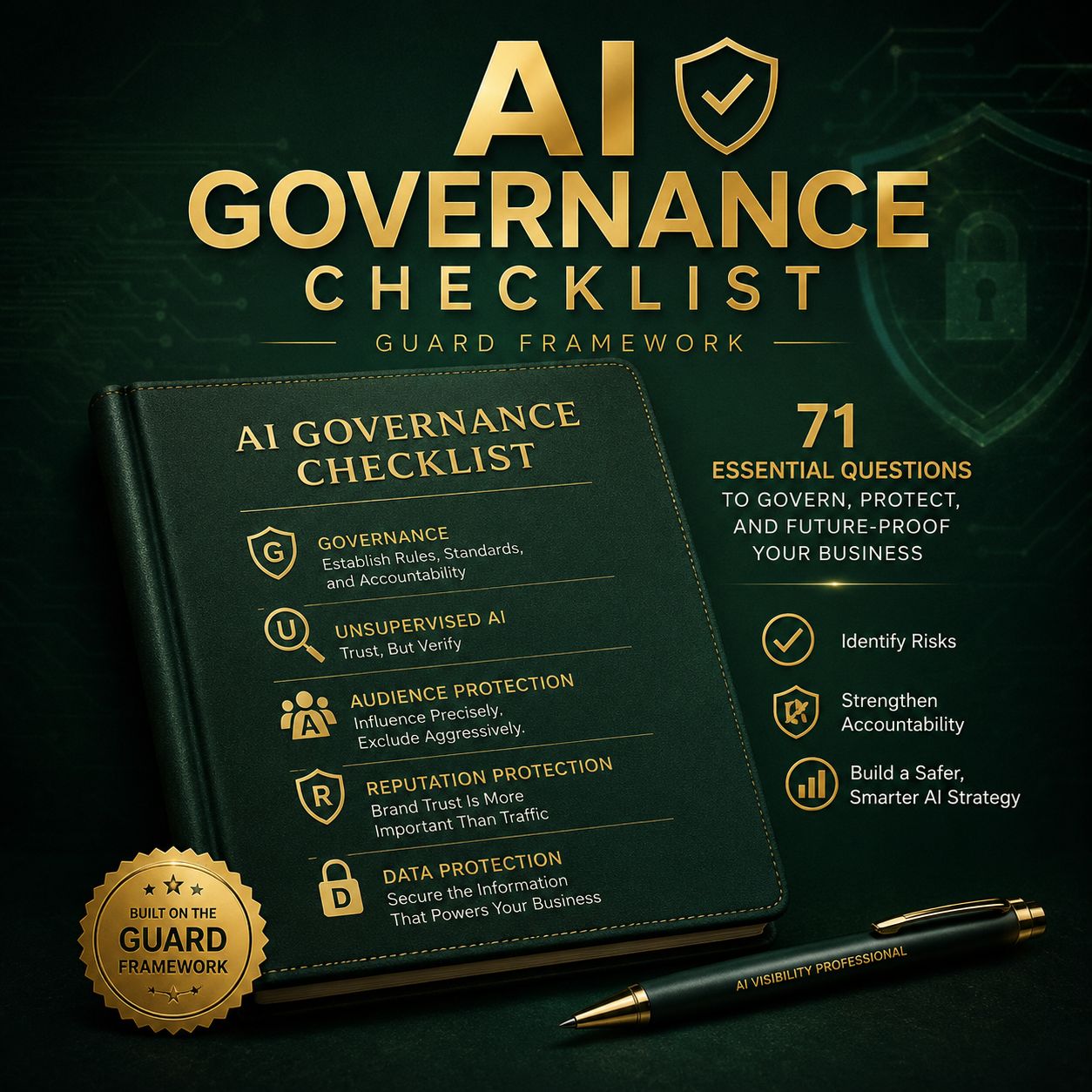
AI Governance Checklist
$50 - A self-guided diagnostic across seventy-one questions that shows you exactly where your AI governance gaps are.
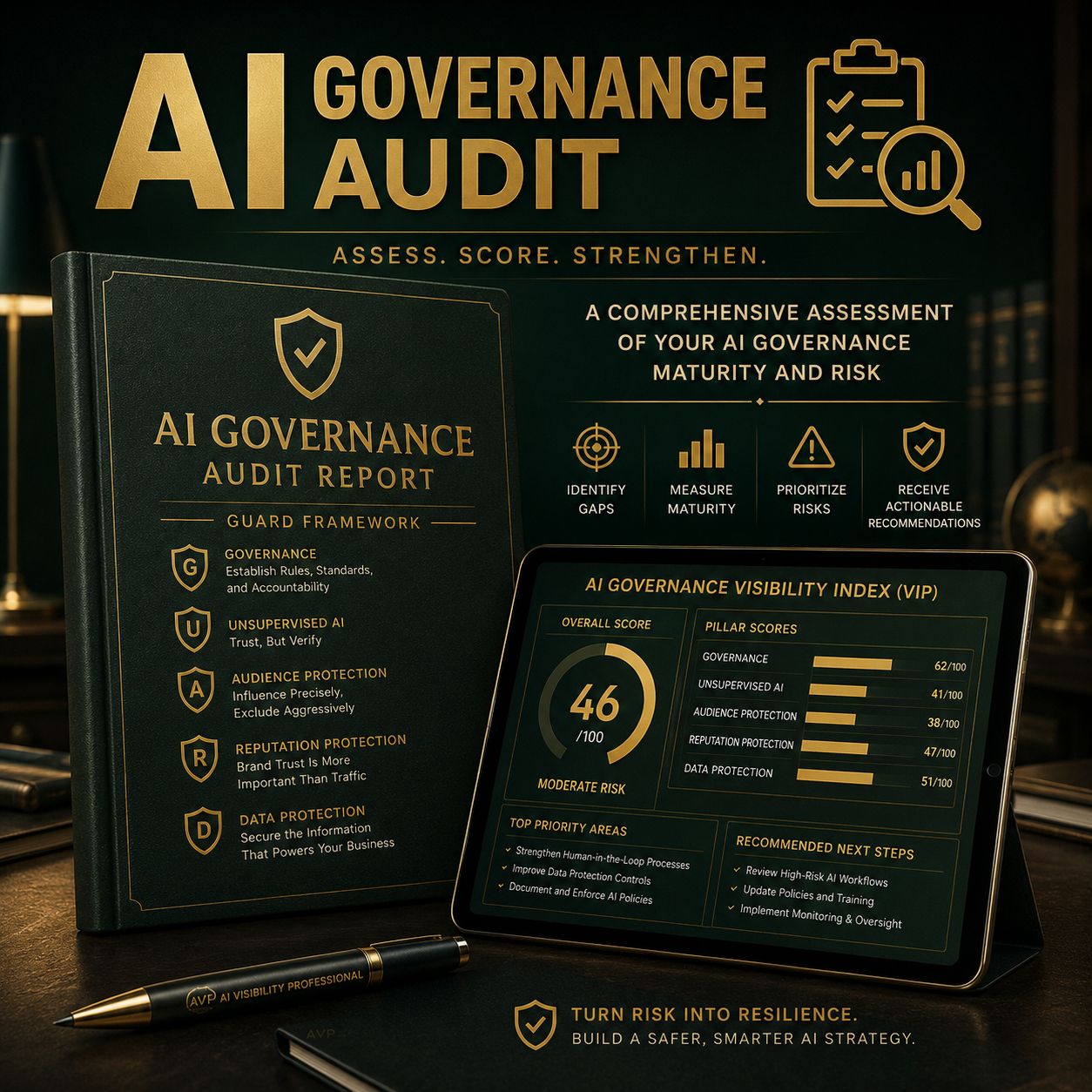
AI Governance Audit
$300 - A professional (human-led) assessment to identify your strengths, your shortfalls, and exactly where to go next.
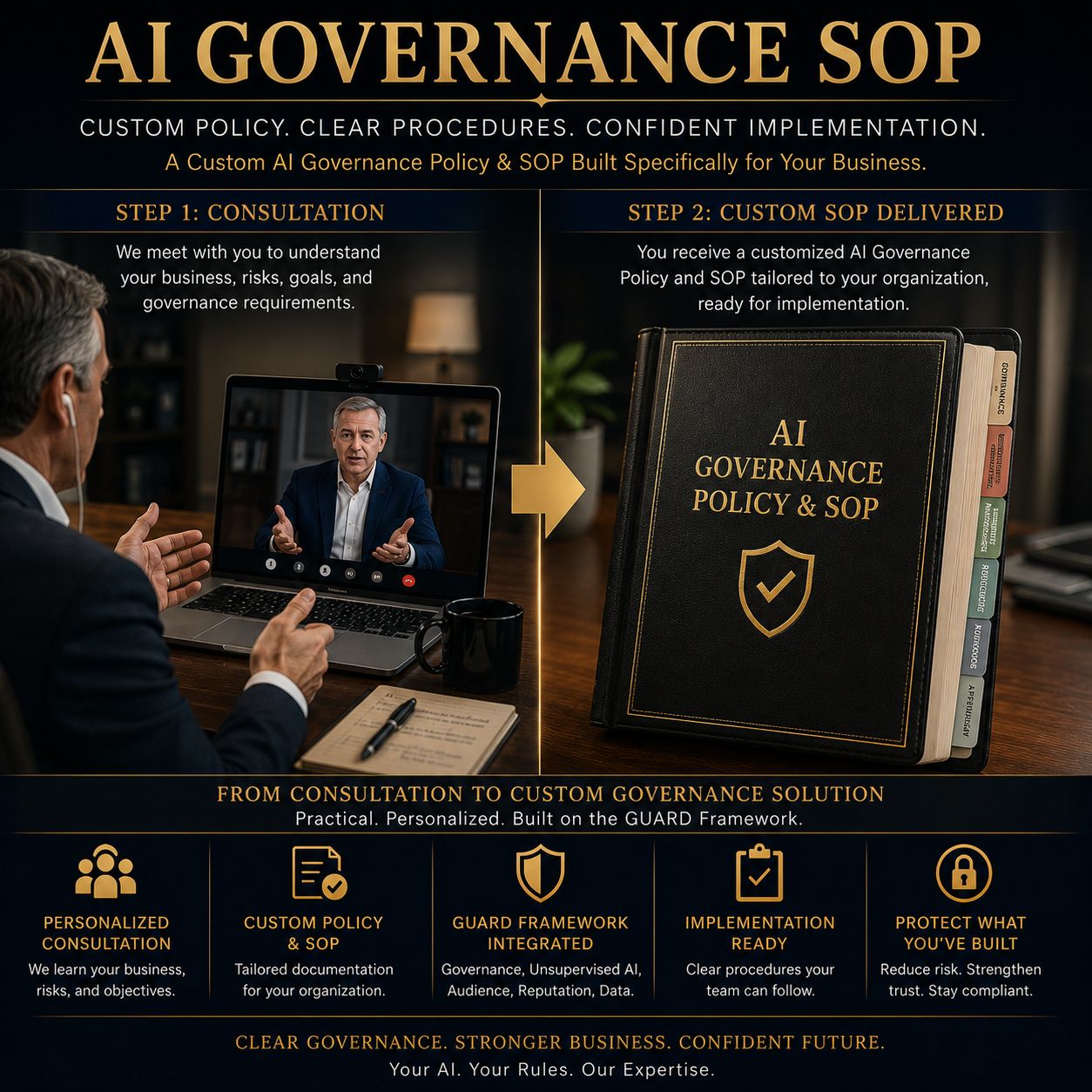
AI Governance Policy
$1000 - A custom AI Policy & SOP built specifically for your organization, ready to implement.
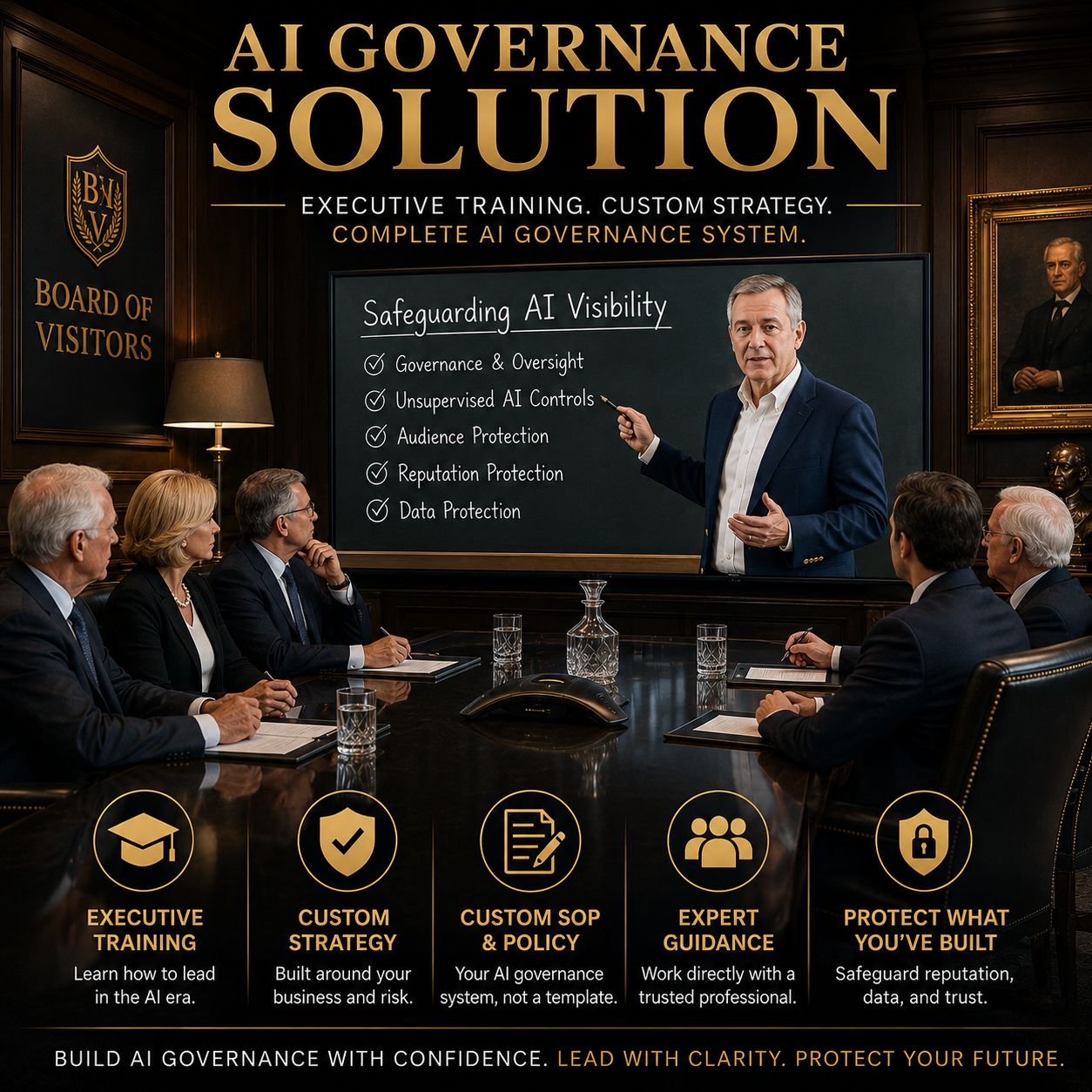
AI Governance Solution
$3000 - The complete engagement: audit, policy, implementation guidance, and direct consulting with Christopher Littlestone.